How Agrochemicals Are Transforming Indian Agriculture
_11zon.webp)
Introduction:
Agriculture in India is and has always been something more than an occupation; it's a way of life that keeps millions of households going and the country's economy running. Yet, in a rapidly changing world, traditional methods cannot alone meet the growing demand for food, fiber, and raw materials. That's where the India agrochemicals market makes a difference as a driving force behind agricultural transformation. Agrochemicals are bridging the gap between conventional farming and scientific innovation by improving crop yields, enhancing soil health, and protecting plants against pests and diseases.
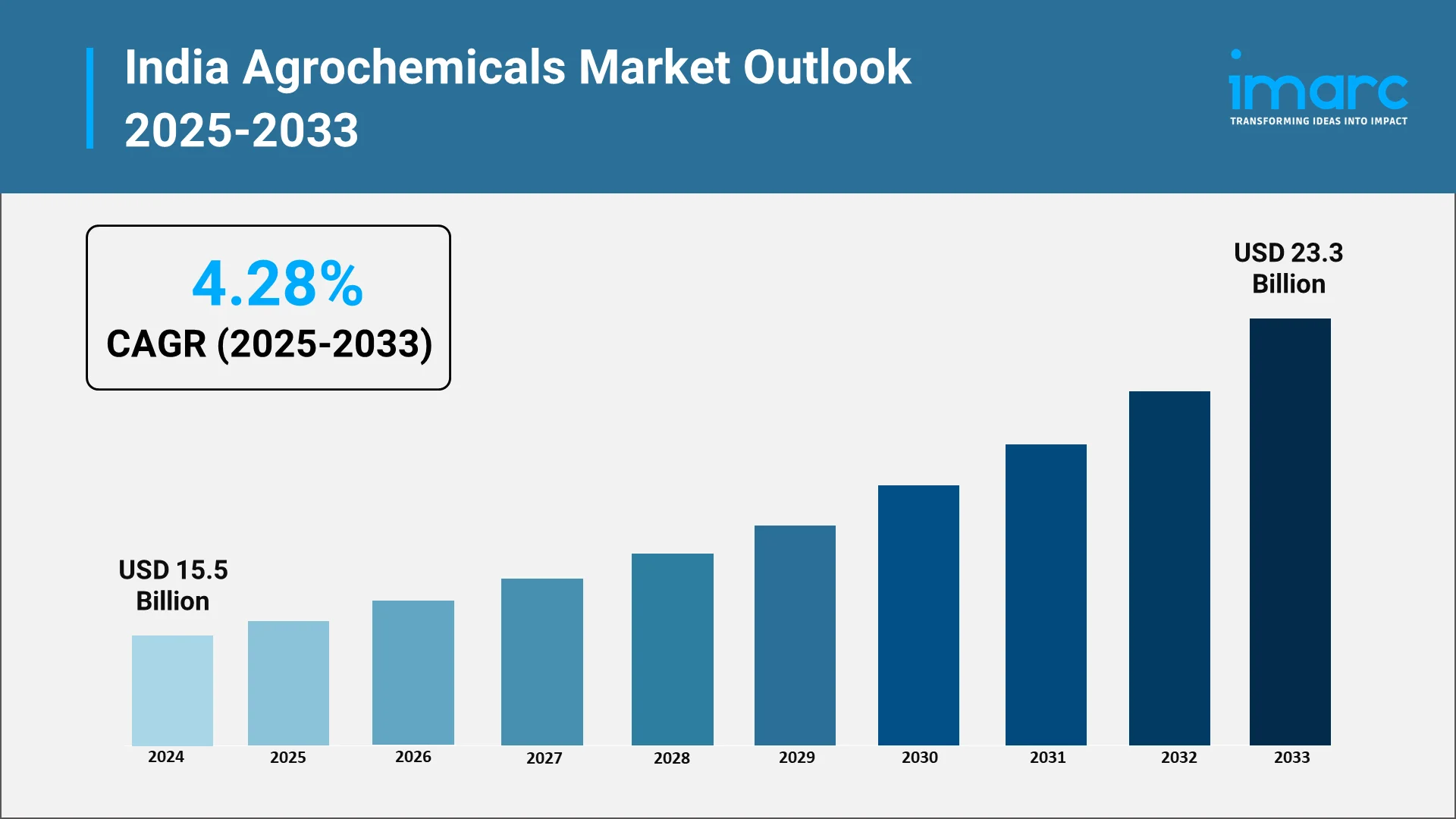
Agrochemical industry in India has redrawn the way farmers operate. From a fully experience-based mode of farming to data-driven, technology-supported agriculture, the burgeoning agrochemical industry of India has become one of the strong pillars of growth. India agrochemicals market size reached USD 15.5 Billion in 2024. Looking forward, the market is expected to reach USD 23.3 Billion by 2033, exhibiting a growth rate (CAGR) of 4.28% during 2025-2033. Agrochemicals no longer refer just to crop protection; they are important tools that contribute to food security, ecological sustainability, and rural development. The expansion in the industry reflects its importance in creating a resilient agricultural ecosystem where productivity is in tune with ecological balance.
Explore in-depth findings for this market, Request Sample
Role of Agrochemicals in Indian Agriculture: Impact & Benefits
Agrochemicals are instrumental in improving the efficiency, quality, and profitability of Indian agriculture. While their primary role lies in protecting crops from weeds, pests, and diseases, they also enhance the overall reliability of agricultural output. In a country where farming depends heavily on monsoons and variable climatic conditions, the India agrochemicals market plays a vital role in ensuring stable and predictable crop yields, thus strengthening food security and farm productivity.
The major components of agrochemical applications include fertilizers, herbicides, insecticides, fungicides, and plant growth regulators. Fertilizers restore essential nutrients in the soil, helping plants develop stronger roots and better growth. Herbicides manage unwanted weeds competing for sunlight and nutrients, while insecticides and fungicides protect crops from pests and fungal infections. Together, these inputs support consistent crop yields, minimize post-harvest losses, and enable farmers to maximize their returns while maintaining the health of their soil and crops.
The India agrochemical industry also contributes significantly to food safety and global market competitiveness. By preventing crop diseases and infestations, farmers can deliver cleaner and higher-quality produce for both domestic and export markets. In 2025, India Pesticides Ltd announced that it had increased its formulation capacity by 50%, raising its annual output to approximately 10,000 MT—underscoring how leading Indian agrochemical firms are scaling up to meet rising demand. Recent innovations such as low-residue and environment-friendly formulations have made agrochemicals safer for farmers and ecosystems. Moreover, precision agriculture and controlled application methods ensure efficient use of resources like water and fertilizers, addressing growing concerns about sustainability. Ultimately, the India agrochemical sector empowers farmers to cultivate healthier crops, preserve natural resources, and achieve sustainable growth, making it an essential partner in India’s agricultural transformation.
Key Growth Drivers for India's Agrochemical Market:
The growth of the India agrochemicals market is being driven by a combination of economic, technological, and social factors. A major driver is the rising demand for food security and higher agricultural productivity. With India’s population continuing to expand and urbanization steadily reducing cultivable land, farmers face the challenge of producing more with limited resources. Agrochemicals offer a scientific and effective solution by enhancing soil fertility, controlling pests and weeds, and safeguarding crops from diseases. In 2025, Punjab Chemicals & Crop Protection Ltd announced a 60 crore capacity expansion to cater to high-value exports and innovate intermediate manufacturing, underscoring how domestic firms are scaling up to meet global demand. As a result, they have become integral to maximizing yield per acre, ensuring reliable harvests, and supporting national food security objectives.
Modernization within Indian agriculture has also accelerated market growth. The integration of advanced machinery, digital platforms, and precision farming techniques has made agrochemical use more efficient and sustainable. Tools such as drone spraying, soil health sensors, and real-time crop monitoring enable farmers to apply the right chemicals in accurate doses, minimizing waste and environmental harm. This shift toward data-driven farming reflects India’s broader movement toward agricultural digitization and sustainable intensification, promoting long-term productivity gains across the agrochemical industry.
Changing consumer preferences and growing awareness of food quality have further boosted demand. Farmers are increasingly using tested formulations to produce crops that meet international standards, strengthening India’s position in global exports. In 2025, Kothari Industrial Corporation Ltd launched 30 neem-based and organic bio-inputs with drone-enabled application across India, underscoring the industry’s transition toward eco-friendly, high-tech crop-care solutions. Meanwhile, ongoing investments in R&D are driving the creation of bio-based, eco-friendly agrochemicals that align with global sustainability goals and address local challenges like pest resistance. Enhanced logistics networks, warehousing, and access to credit have also improved product availability across rural regions. Together, these factors are creating a robust foundation for the continued expansion of the India agrochemical sector.
Regulatory Framework & Policy Landscape of India's Agrochemical Industry:
The India agrochemical industry operates under a comprehensive regulatory framework that balances innovation with safety and sustainability. The government ensures that only safe, high-quality, and effective products enter the market through stringent registration, testing, and periodic reviews. Each agrochemical formulation is evaluated for its environmental impact, human safety, and efficacy before approval. Regulations also extend throughout the product’s life cycle from research and manufacturing to labeling, distribution, and application, ensuring that farmers and consumers are protected from harmful exposure and that products are stored and handled responsibly.
In recent years, the government has aligned regulatory norms with global standards, enhancing the competitiveness of India’s agrochemical industry in international markets. Greater transparency in labeling, traceability, and compliance has strengthened the country’s reputation and export prospects. In July 2025, the Central Insecticides Board & Registration Committee (CIB&RC) approved 19 new pesticide registrations, including herbicides, insecticides, fungicides, and nematicides, expanding India’s portfolio of advanced crop protection products. Moreover, policy support for innovation has encouraged the approval of sustainable formulations and next-generation molecules. Simplified regulatory pathways for bio-pesticides, nano-formulations, and green products have accelerated product development. With initiatives like Make in India promoting domestic manufacturing, the policy environment continues to attract investment, reduce import dependency, and stimulate local innovation. Together, these measures position the India agrochemical sector as both globally responsible and domestically resilient.
Government Initiatives & Support for India’s Agrochemical Industry:
The proactive involvement of the government has been instrumental in the growth and development of the India agrochemicals market. Recognizing the vital connection between agrochemicals and national food security, multiple initiatives have been launched to promote sustainable practices and educate farmers. These efforts are designed not only to enhance productivity but also to safeguard ecological balance and public health. Through structured awareness campaigns and training programs, the government aims to ensure that farmers use agrochemicals effectively, responsibly, and safely.
Among the most influential initiatives is the Integrated Pest Management (IPM) program, which emphasizes a balanced use of biological, mechanical, and chemical methods to manage pests efficiently. By teaching farmers best practices, IPM reduces excessive dependence on chemicals, improves soil health, and encourages environmentally sustainable farming. In July 2025, Dhanuka Agritech Ltd. in collaboration with ICAR-CICR (the ICAR Central Institute for Cotton Research) organised a three-day awareness campaign across key cotton-growing areas of North India focused on IPM strategies, including timely pest surveillance, use of bio-inputs, and farmer education on safe agrochemical use. Additionally, training sessions on proper handling, storage, and disposal of agrochemicals have played a key role in minimizing environmental pollution and human exposure risks. Alongside this, the promotion of balanced fertilizer use through soil testing and digital advisory services enables farmers to determine the exact type and amount of nutrients required, ensuring resource efficiency and preventing soil degradation.
To further boost domestic capabilities, the government provides incentives for local manufacturing, innovation, and research in the agrochemical industry. Public-private partnerships are being encouraged to create region-specific formulations suited to India’s diverse agro-climatic conditions. The development of digital platforms has improved supply chain transparency and accessibility, ensuring that quality agrochemicals reach even remote farming communities. Collectively, these initiatives strengthen the India agrochemical sector, making it a key driver of rural development and agricultural modernization. By fostering innovation and sustainability, the government continues to build a robust ecosystem that supports farmers and ensures long-term sectoral growth.
.webp)
Opportunities and Challenges Facing India’s Agrochemical Industry:
The growth of the India agrochemicals market has reached an important point where innovation and opportunity meet. The convergence of technology, sustainability objectives, and emerging market requirements unlocks all-new avenues for advancement. Farmers are becoming more aware of the scientific and data-driven way of farming; hence, they are increasingly accepting newer, value-added agrochemical solutions. This trend also bodes well with the increasing demand for organic and eco-friendly agriculture and, thus, for bio-based agrochemicals that ensure very high productivity with environmental care. As consumer preferences continue to favor greener alternatives and regulatory frameworks encourage their adoption, the Indian agrochemical industry is at an interesting threshold.
A major catalyst for this growth is the digitalization of agriculture. The integration of artificial intelligence, drones, remote sensing, and precision farming tools is optimizing input use and reducing waste. With real-time data on crop health and soil conditions, farmers can now apply agrochemicals more precisely and sustainably. These technological advances not only enhance productivity but also reduce environmental footprint, supporting India’s larger vision of sustainable farming. However, challenges persist, especially uneven awareness among small and marginal farmers about the correct and safe use of agrochemicals. Overapplication or misuse can lead to pest resistance and environmental damage; therefore, training and education remain at the top of the priority list for the sector.
Another key challenge is environmental sustainability. It requires continuous innovation in green chemistry, focusing on biodegradable, low-toxicity formulations for soil, water, and biodiversity protection. The adoption of strengthened regulatory compliance and waste management systems will further support this trend. Besides, climate variability, trade restrictions, and fluctuating input costs test the resilience of the industry. Yet, these challenges also provide opportunities for innovation and collaboration. Companies that invest in localized R&D, sustainable manufacturing, and farmer empowerment will thrive in this changing landscape. Indeed, with concerted efforts from policymakers, industry players, and farmers, the India agrochemical sector can achieve inclusive, responsible, and globally competitive growth.
Conclusion:
The story of Indian agriculture is fast changing from its traditional roots to one powered by technology and science. The India agrochemicals market will be at the forefront of this change, enabling an improvement in productivity, quality, and sustainability. The industry helps farmers with advanced solutions and knowledge to ensure that agriculture remains not only profitable but also environmentally sound. The Indian agrochemical industry stands at an interesting juncture between innovation and responsibility. While it will continue to grow, its importance goes beyond crop protection in that the industry is sustaining livelihoods, strengthening food security, and contributing to national economic progress. With continued government support, effective regulation, and increasing farmer awareness, the sector is in a good position to lead the country into a new era of agricultural excellence. Agrochemicals, when used wisely, epitomize the coming together of nature and science-a partnership enabling the Indian farmer to grow not only crops but a better future for the generations to come.
Choose IMARC Group for the unmatched market intelligence and strategic insights:
Partner with IMARC Group to get unparalleled expertise in navigating the rapidly evolving India Agrochemicals Market. Our research solutions are specifically designed to help businesses, investors, and policymakers make data-driven decisions in this transforming sector.
- Data-Driven Market Research: Gain access to deep insights into the India agrochemicals industry, from product innovation and usage patterns to emerging technologies in bio-based formulations, nano-agrochemicals, and precision farming tools.
- Strategic Growth Forecasting: Stay ahead of the changing market with expert forecasting, pinpointing trends in sustainable agriculture, integration of digital farming, and expansion in eco-friendly chemical solutions across key regions.
- Competitive Benchmarking: Assess the market leaders, their product portfolios, and R&D pipelines, while monitoring the competitive dynamics that shape the agrochemical landscape in India.
- Policy and Infrastructure Advisory: Understand the regulatory frameworks, government incentives, and sustainability initiatives that impact product approvals, manufacturing, and distribution in the agrochemical supply chain.
- Custom Reports and Consulting: Engage with insights matched to your business objectives—be it the launch of new crop protection products, the entry into rural markets, or an investment in sustainable agricultural technologies.
At IMARC Group, it is our endeavour to empower the stakeholders of India's agriculture and chemical industries by providing actionable intelligence and strategic clarity. Together, we can accelerate innovation, promote responsible farming practices, and build a resilient, sustainable future for India's agriculture sector.
Our Clients










Contact Us
Have a question or need assistance?
Please complete the form with your inquiry or reach out to us at
Phone Number
+91-120-433-0800+1-201-971-6302
+44-113-547-7077
Previous Post

Australia's agricultural machinery industry stands as a cornerstone of the nation's farming modernization drive, experiencing robust expansion fueled by technological innovation and evolving agricultural demands. According to IMARC Group's comprehensive market analysis, the Australia agricultural machinery market reached a valuation of USD 4.0 Billion in 2024, reflecting the accelerating adoption of advanced farming equipment across the continent's diverse agricultural landscapes.
Australia fertilizer industry is one of the key pillars of the country's farm setup. Fertilizers are a critical input in soil productivity, boosting crop output and the uniform production of food and other farm products. Australia has a wide and varied agricultural scene with grain growing horticulture, livestock, and specialty crops. Every industry depends upon fertilizers to optimize production and ensure soil fertility, especially in areas where the natural soil nutrients are nil or climatic conditions are unsuitable.
The Japan agritourism industry is experiencing remarkable transformation as travelers increasingly seek authentic connections with rural landscapes and agricultural traditions. Agritourism represents a dynamic fusion of agriculture and tourism, offering visitors immersive experiences through farm stays, hands-on agricultural activities, and cultural immersion in Japan's countryside.
HDPE pipes are thermoplastic piping systems made from high-strength polyethylene resin, which features excellent flexibility, high impact resistance, and strong chemical and corrosion resistance. HDPE pipes are produced by extruding molten polyethylene into a variety of diameters and pressure ratings. Their seamless structure, along with their low friction and resistance to internal pressure and external load, makes them ideal for the transport of fluids. HDPE pipes boast superior endurance, long service life, and leak-free performance, since it is possible to join them through heat fusion, thus creating monolithic, continuous pipelines that are suitable for buried, aboveground, or underwater installations.
The Brazil agricultural machinery market stands as a cornerstone of the nation's agricultural modernization drive, experiencing robust expansion fueled by technological innovation, government support initiatives, and the imperative to enhance agricultural productivity across the world's largest soybean producer. According to IMARC Group's comprehensive market analysis, the Brazil agricultural machinery market reached a valuation of USD 3.1 Billion in 2024, reflecting the accelerating adoption of advanced farm equipment Brazil offers across diverse agricultural landscapes spanning grain production, sugarcane cultivation, coffee farming, and livestock operations. This impressive growth trajectory positions the industry for continued prosperity, with projections indicating the market will reach USD 4.5 Billion by 2033, exhibiting a compound annual growth rate (CAGR) of 4.1% during the 2025-2033 forecast period.
The smart agriculture market is revolutionizing the global agriculture industry through the integration of cutting-edge technologies such as Internet of Things (IoT), artificial intelligence (AI), robotics, sensors, and big data analytics. As the world population continues to grow, farmers and agribusinesses face mounting pressure to increase productivity while minimizing environmental impact.
Australia's agribusiness sector is at a crossroads, combining its historic advantage in bulk farming with new-generation technologies and green practices. The industry is pivotal to the nation's economy, adding billions to GDP and underpinning exports to overseas markets. Increasing food security demands and climate change pressures have compelled Australian farmers and agribusiness companies to take up innovation at an unprecedented scale.
A fertilizer is any natural or manufactured material containing one or more nutrients that are applied to the soil or plant tissues and that are usually beneficial for plant growth by improving fertility. The elements that plants need in large quantities, namely nitrogen (N), phosphorus (P), and potassium (K), are known as the primary macronutrients. The other secondary nutrients include calcium, magnesium, and sulfur; micronutrients include zinc, iron, manganese, and copper.
Coco peat, or coir pith or coir dust, is a fibrous natural byproduct generated during the processing of coconut husks to extract coir fiber. Coco peat is an organic, renewable, and biodegradable product that has gained international significance as a sustainable substitute for peat moss in horticulture, agriculture, and hydroponics. The coco peat production process starts with the gathering of coconut husks, which are retted, soaked, and mechanically treated to exclude long coir fibers that are employed in ropes, mats, or brushes. The leftover fine material, the pith is washed, sieved, dried, and compressed into briquettes, blocks, or grow bags.
Bamboo is a poaceous grass which regrows rapidly, has a high yield of biomass and good material properties, ranging from tiny clumping species to huge timber-grade culms over 20 meters tall; genera of economic importance are Bambusa, Phyllostachys and Dendrocalamus. Botanically, bamboo integrates the regenerative benefit of an agricultural crop (short rotation, annual or multi-annual yield) with certain mechanical characteristics of softwoods like large specific strength, good tensile performance, and natural hollow culm geometry for light-weight structural property.
Sustainability is reshaping the future of agriculture, energy, and environmental management, with biochar emerging as a transformative force within the ecosystem. Produced from biomass through pyrolysis, biochar enriches soils, strengthens crop resilience, and reduces dependence on chemical fertilizers. According to reports, long-term application delivers measurable benefits—boosting average crop yields by 10.8% and increasing soil organic carbon by 52.5%—underscoring its role in restoring soil health while combating degradation.
Sesame seeds are one of the oldest oilseed crops known to humankind, prized for their high oil content, distinctive nutty flavor, and valuable nutritional profile. They are composed of approximately 50–60% oil and 20–25% protein, making them an essential raw material for edible oil, bakery, confectionery, and health food industries. The seeds are also rich in antioxidants such as sesamol and sesamin, which contribute to their oxidative stability and health-promoting properties. Processing of sesame seeds typically involves cleaning, dehulling, roasting, pressing, and solvent extraction, depending on the end-use product.
The global seed industry plays an important role in ensuring food security and the sustainability of agricultural practices. As the world grapples with food insecurity, climate volatility, and shrinking arable land, the market has emerged as a critical enabler of agricultural resilience.
Explore how to start a biofertilizer manufacturing business, from setup and licenses to market trends, investment, and sustainable growth strategies.
World Environment Day, observed on June 5th each year, serves as an important reminder to protect and preserve our planet. This day inspires millions of people from across the globe to reflect on environmental issues and take tangible measures toward securing the world for future generations.
Bamboo is one of the sustainable and versatile materials that are being used in several different industries. Bamboo provides a very environmentally friendly option for food packaging, as it reduces plastic use. At high temperatures, bamboo is burnt to produce bamboo biochar. This is a soil enhancer for soil health and carbon sequestration. Bamboo is also a sustainable building material and is used in the construction industry. Due to its antibacterial properties, bamboo vinegar, which is a byproduct of bamboo charcoal manufacturing, is used in skincare and agriculture.
The global poultry market is growing at a fast pace, driven by several factors, such as rising demand for affordable and protein-rich food sources, especially in developing countries. The growing preference for white meat over red meat due to health considerations, as well as urbanization and increasing disposable incomes, also contributes to higher consumption of poultry products. Moreover, technological advancements in poultry farming, such as improved breeding techniques and feed conversion ratios (FCR), enhance productivity and efficiency, further boosting market growth. As per IMARC Group, the global animal feed market size reached US$ 518.4 Billion in 2023 and is expected to reach US$ 674.7 Billion by 2032, exhibiting a growth rate (CAGR) of 2.9% during 2024-2032.